Alternative Sentiences and AI ?

My thought-post today in LinkedIn. I am seldom there, because it’s not my favourite milieu, but the AI experts I mentioned are very active in LinkedIn, so I posted this there to let them know their work has impacted me. I always try to recognise people who have helped or inspired me in some way or other.

White on black background, sketch of Lucy greyhound. Nose tilted downwards towards her left, eyes looking down enquiringly, her ears are relaxed but perked, ready to take on new information. She wears a blue brocade collar with a large red flower. This sketch is from a photo of Lucy taken at SYNC Sg 2019, I was sitting on the floor, exhausted in near shutdown, and she got up from her fluffy mat,  and was looking at me, always caring always alert to my needs.

Image description in Alt Text but copied here too:
White on black background, sketch of Lucy greyhound. Nose tilted downwards towards her left, eyes looking down enquiringly, her ears are relaxed but perked, ready to take on new information. She wears a blue brocade collar with a large red flower. This sketch is from a photo of Lucy taken at SYNC Sg 2019, I was sitting on the floor, exhausted in near shutdown, and she got up from her fluffy mat, and was looking at me, always caring always alert to my needs.


Sketch of Lucy Like-a-Charm – speaking without words.

I don’t know much about AI, but I became interested after hearing Wan Wei, Soh & Ammar Younas in a panel speaking passionately about AI during SIBOS2024 in Beijing. I’ve also been reading articles posted by them & Tony Fish. As an Autistic autism researcher & multimodal transdisciplinary artist focusing on alternative sentience / empathic resonance and parallel embodiments, AI fascinates me. In an early experiment at my university in Australia, more than 10 years ago, I found that I was far more comfortable alone in a room with a humanoid robot, than with a real human stranger, & the experience stayed in my mind. That comfort level was not at all close to what I enjoy when I am with amiable non-human animals, nature or the elements, but definitely better than with humans. Now, thinking about AI, and the fact that AI entities are already beginning to develop “personalities” of their own – fundamentally, if AI is ‘fed’ the right kinds of information about neurodiversity, Autistic, neurodivergent, neuroholographic states of Beingness, would it then not follow that the AI entity would be a far more comfortable, comforting & even, dare I say it, empathic companion than the average misinformed, prejudiced & discriminating ‘real’ human? And then, the question: Who therefore can be said to possess more “humanity”? The AI entity developed with the right perceptions & attitudes, or the average human holding onto erroneous & harmful notions without wanting to expand their thinking?

Regardless, I believe that the effort of studying the human state-of-being still desperately NEEDS to include wisdom gleaned from non-human animals, nature & the elements, the fundamental expansion of our narrow mindsets to consider alternative sentiences, not to be afraid of the possibilities, but to be confident that our human percipience CAN and WILL handle it all, if we are willing to embrace new understanding with respect & for the sake of the greater good, not just of humankind, but all that we are intricately intertwined together with, inside a beautiful multidimensional tapestry of Being.

I’ve been badgering research institutes & researchers to consider this trajectory for serious study, especially efficacious if from the Autistic / neuroholographic viewpoint, but to little avail. Humans are still so obsessed by navel-gazing, I fear a self-destruct moment if we do not reach outwards to learn. Some scientists (S.Simard) are already proving what many Autistics always knew, even from childhood: that trees can & do communicate meaningfully. Therefore contemplating alternative sentiences even further than that of non-human animals. But Autism research is still stuck deep inside human-centric psychology, psychiatry, sociology etc disciplines. There is a vast universe out there yet to be explored, but few want to do so. Autistics do but without agency, we cannot do much. Yet. I still hope. In my lifetime? Will AI help?

Dreams, Passion and Purpose – SUSS 2023 10 10 Convocation Speech

As promised to some of my friends and followers of my pages, blogs and website, here is the transcript of my convocation speech tonight at the SUSS Convocation 2023: Session 3 – Undergraduate Programmes (NSHD). The Youtube ‘live’ video (link below) does not have captions, so I have put my transcript here.


Mr Aaron Tan, Member of SUSS Board of Trustees; distinguished guests, graduates, ladies and gentlemen, thank you for this honour. My heartiest congratulations on this very special occasion.

I cannot tell you how to make a lot of money, rise up the corporate ladder, or how to achieve worldly success. I have never managed any of these. I owe my very existence today to a few loyal friends, my one supportive sister and a gentle yet magnanimous creature called Lucy Like-a-Charm, a Greyhound rescued from the cruel racing industry in Australia.

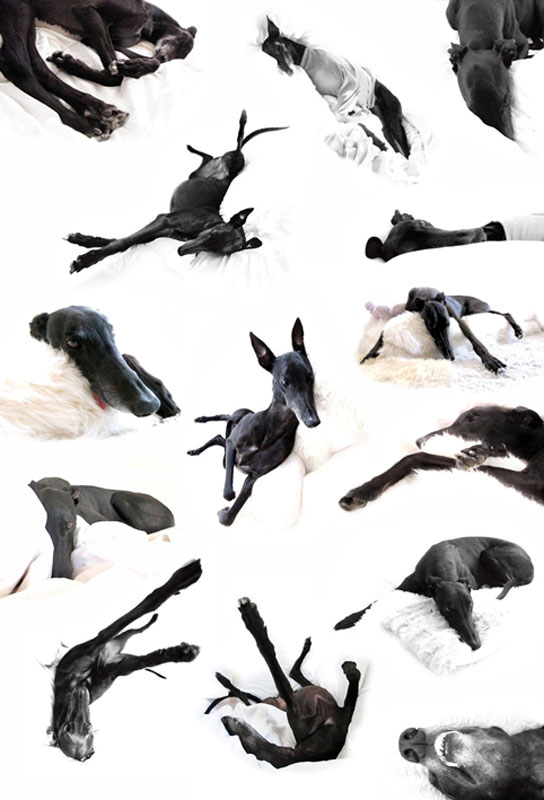
(Slide 1 – Lucy Like-a-Charm, a black Greyhound is lying on a white puffy quilt, head upright, looking at camera, ears perked up and spread out, mouth open in a happy smile.)

So, what can an ordinary person like me bring to this milestone occasion? Please allow me to share a glimpse of my life’s journey. I was born in 1965, the year of Singapore’s independence. Like many in my generation, I found out my Autistic identity only in my early forties. I’ve also struggled with a lifelong, painful medical condition.

Continue reading

Creating Clement Space: Collaborative Design for Accessible Inclusion

Apologies for the late post. This is my latest article for the National Gallery Singapore, about creating Clement Space in public places – conducive environments for restoration and respite – that is accessible and inclusive. Please click on title that will link to the article on the NGS website.

Creating Clement Space: Collaborative Design for Accessible Inclusion

Lucy Like-a-Charm – Elemental Empathic Resonance.

Author’s note:
This piece took me awhile to complete, because I have been struggling with the devastating aftermath of Lucy’s death on my mind, body and every part of my existence. I was invited some time ago to write a reflection for a blog-journal, but upon submitting it on 4th July 2023 at 14:22 Singapore time, I was told by the editor (in the UK) that they will push back my article to end July, because the editor was too busy with other things. Coincidentally, they have just published another piece expressing almost identical thoughts, though written in a completely different style, of course. I am fine with that. The more people asking the same questions, the louder our voices become.

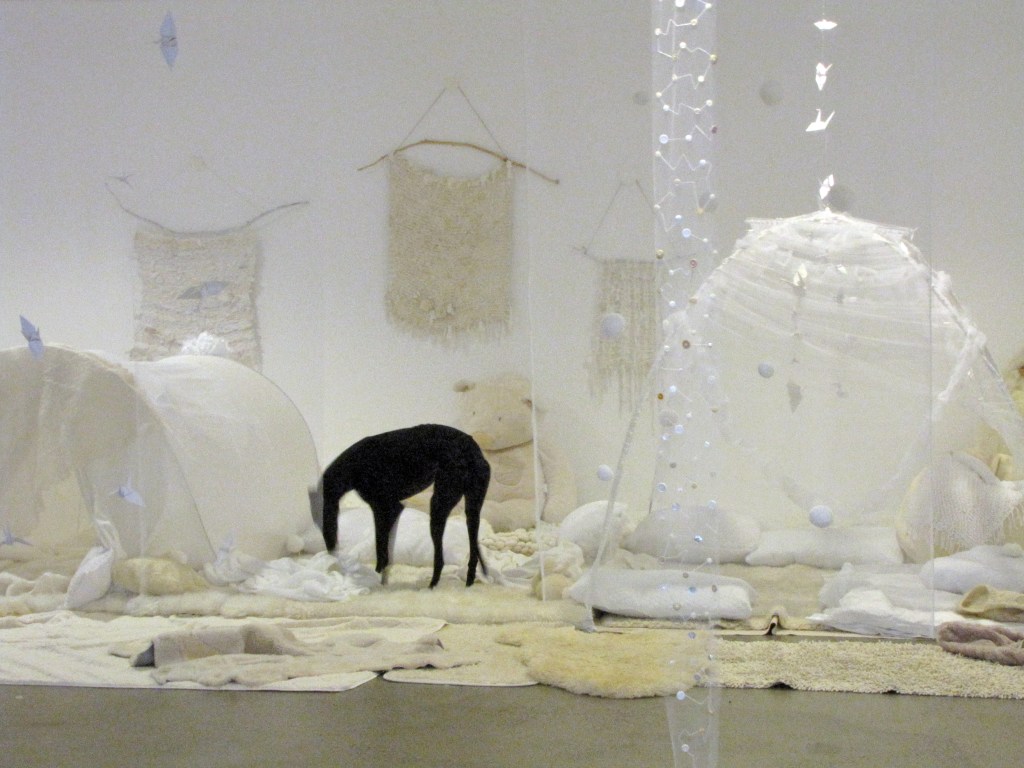
I have therefore decided to put mine here, unedited, with date and time reflecting the exact moment my piece was submitted via cyber-waves into the Great Unknown. Whether or not the journal’s editor decides to publish it in the near future, when and with what edits they deem fit, is immaterial to me. The Artist respects the autonomous entity of The Work, which will forge onwards along its own inexorable path, free from the tyranny of control and manipulation at the hands of humans preoccupied by and with human-centric glorification and maniacal demands of human ego. After some deeper contemplation, I feel that The Work, in this embodiment, is telling me that it would like to be launched from this Clement Space, an interstice created for me, for us both, by Lucy, because it is in its very purest essence an intimate tribute to Lucy, and to her and only her, do I really owe anything at all. When the Artist frees The Work, the Artist shall also be emancipated. I love you so, Lucy Like-a-Charm, thank you for teaching me such profound sensing.

Content warning: suicide and death is discussed in this article.


Continue reading

Clement Space – a new iteration.

I am excited to announce my commission by the National Gallery Singapore, to install a new iteration of Clement Space. Opening on 11 January 2020 as part of the larger Light to Night Festival, my installation will run on until 1 March 2020.

Continue reading

Autism and the Arts

An excellent article by Katie Sutherland in The Conversation about Autism and the Arts. It is both a relief and a joy when non-autistic writers or producers etc write / make features that are respectful, inclusive and accurate when portraying or talking about Autism. Thank you, Katie Sutherland!

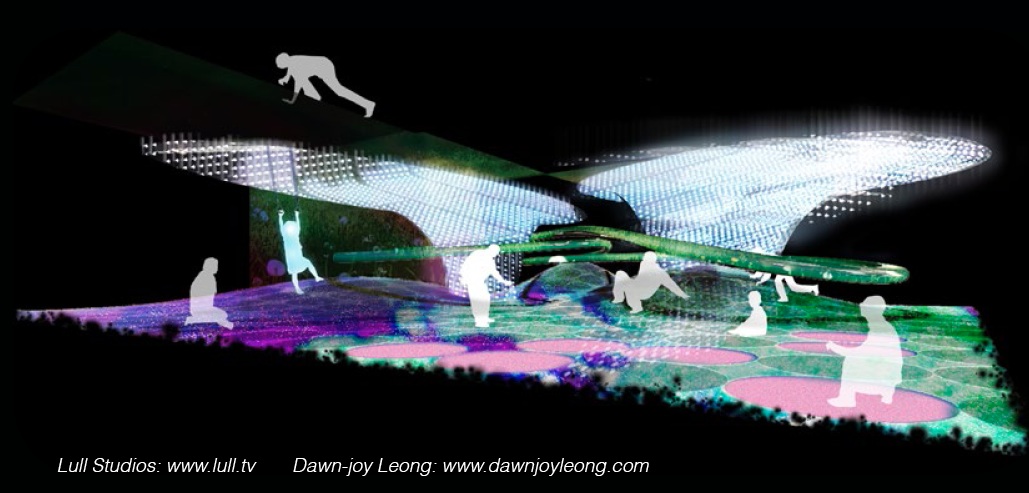
Featuring Snoosphere by Lull Studios, my two works, Clement Space and An Olfactory Map, and Thom & Anglemouse’s Rush Hour at Cloud Heaven. Please click on the link:

“Autism and the arts: making a space for different minds.”

Excerpt:

“Rancid perfume. Stinky babies. Sweaty clothes. Garlic hair. Human bodies putrefying and I think my own is beginning to smell,” declares artist and researcher Dawn-joy Leong in her installation, An Olfactory Map of Sydney, at Customs House in Circular Quay.

At times confronting, at times funny, Leong’s graphic description of the assault of odours while travelling by bus forms a series of video monologues about her sensitivities to smells, sounds, light, colour, tastes and movement.

Leong is autistic and regularly feels overwhelmed due to hyper-sensory perception. This can trigger extreme reactions such as nausea, headache, vertigo and sometimes excruciating pain. Through Leong’s work, the viewer gets a real sense of how exhausting having such a heightened awareness must be, particularly in a world designed for “neurotypicals” – people who are typically wired or non-autistic.

Reflections on the neurodiverse city

Leong_4(1)

My article for Artlink Magazine, “Reflections on the neurodiverse city,” is now free to access online. Click on the title for the full article.

Excerpt:

“Many autistics experience “body‑in‑space” challenges. The opening poem describes my own proprioceptive quirk: I can dance, but the simple task of walking along the pavement without tripping requires a conscious rhythmic pattern in my mind, usually in the form of a song or a tune. Other idiosyncrasies inherent to autism include extreme sensitivity to the visual, auditory, olfactory and tactile senses. Lights, colours, sounds, vibrations, smells, tastes and textures may separately or in complex confluence trigger extreme reactions like nausea, headache, vertigo and even excruciating pain. The mental propensity towards precision – that is, noticing things in greater detail, also heightens sensory reception and reaction. A common unifying theme in this richly woven, polyrhythmic and highly chromatic existence is that of anxiety. Coping with life in an environment not designed for and conflicting with native autistic modalities, the autistic person is constantly in a state of stress.”

Snoösphere 2017 – call out!

Upcoming project: Call Out!

snoosphere

Snoösphere, 2017

Snoösphere 2017 – a multisensory experience with a focus on autism, featuring autistic creative partnership.

Lull Studios and UNSW would like to invite autistic persons of all ages to join us as creative advisors in designing a gallery-based art installation.

Snoösphere is a space made up of interactive sound, vision, aroma, and touch-controlled elements, in which people can roam and explore. It is an immersive space for promoting discovery, empathy and understanding of the spectrum of neurodiversity.

Named for the noösphere, which is the phase in the Earth’s evolution after the biosphere – a future planetary sphere of mind – the Snoösphere promotes embodied consciousness of the sensory and energetic properties and performance of physical space.

We see this as the especial province of autistic artists. Instead of being passive end-users, autistic participants are an influential part of developing Snoösphere, putting into practice the ethos “Nothing About Us Without Us.”

Dr. Dawn-joy Leong is the autism consultant for Snoösphere, personally facilitating the interesting and fun autism-friendly sessions.

Participants will experience creative engagement and learn about the process of building a multisensory interactive environment aimed at supporting the sensory needs of autistics. Contributions from our autistic advisors will be duly acknowledged in the final production.

Introductory consultation sessions and workshops for small groups and individuals (completely free) will be held 17-20 November 2016, at UNSW Art & Design, Paddington.

Please feel free to contact Dawn-joy for more detailed information, or to register your interest in becoming part of our project. Dawn will reply to emails promptly and no question is too trivial.

Email: dawnjoy@mac.com

Phone: 0477424585

Acknowledgements

2015-Sonata---Lucy-Sonorous-Repose

Sonorous Repose – Lucy Like-a-Charm 2015 by Dawn-joy Leong     (please do not reuse without seeking prior permission)

Dear Friends and Supporters,

We have made it! The PhD has passed muster and now it’s time for acknowledgements.

 —-

Scheherazade’s Sea – autism, parallel embodiment and elemental empathy.

 Dawn-joy Sau Mun Leong, UNSW Art & Design, April 2016

Dedication:

To my father, Dr. Leong Vie-Ying (1930-2007).

Acknowledgements:

This work would not have been possible without the following:

Deepest gratitude to my supervisors,

Professor Jill Bennett and Dr. Petra Gemeinboeck,

for your patience, guidance, advice, support, and for believing.

Thank you, Dr. Sally Clark, for your advice, encouragement and support.

My Lucy Like-a-Charm

My family:

Thank you, mother, Molly Chye Gek Ong, for your care and fortification.

My beloved baby-sister and faithful champion, Althea Leong,

thank you for always being here, there, and everywhere for me.

Dear brother-in-law, Robin Sing,

thank you for your patience, sustenance and unquestioning support.

My canine nephews, Bizcuit and Tiny Sing

Thank you, my friends who have played important roles in my journey:

Yee Sang, Ho

Rick Feedtime

Minh Vuong

Kateryna Fury

Colin G. Marshall and Misty Marshall

Shan Patterson and Sally Patterson

C.J. Wan Ling, Wee

Margie Anne Edmonds

Brad Beadel

Gavin Koh

Boon Ling, Yee

Shane Fenton

Andrea Kingan

Rosemary Wilkinson

and

Everyone who has walked a part of our journey alongside us, however briefly, every single moment has mattered.

The Big Anxiety Project

The-Big-Anxiety-Project.jpg

The Big Anxiety Project

The BIG Anxiety Project is an innovative citizen science venture developing creative approaches to health research and data visualization.”

Lucy and I are honoured to be a small part of this amazing project, which kicks-off on 5 June 2016, at the Museum of Contemporary Art, 3-6pm, level 6, with this interactive talk-cum-discussion session.

Friends in Sydney, if you will brave the weekend’s wet and wild weather, please do join us at this interactive event.

If you are not in Sydney or unable to attend the above event, please take part in the Big Anxiety Project’s survey on anxiety at the Black Dog Institute: click here!