Inside the Heart of the Rainbow

Forgive the delay in posting this. So much has been going on in the last two months, I can hardly catch my breath even now.

Here is the review I wrote for Artlink Magazine, covering the recent Yayoi Kusama exhibition in Singapore: Yayoi Kusama – Life is the Heart of the Rainbow.

And here are some of my own photographs from the amazing experience.

Reflections on the neurodiverse city

Leong_4(1)

My article for Artlink Magazine, “Reflections on the neurodiverse city,” is now online.

Excerpt:

“Many autistics experience “body‑in‑space” challenges. The opening poem describes my own proprioceptive quirk: I can dance, but the simple task of walking along the pavement without tripping requires a conscious rhythmic pattern in my mind, usually in the form of a song or a tune. Other idiosyncrasies inherent to autism include extreme sensitivity to the visual, auditory, olfactory and tactile senses. Lights, colours, sounds, vibrations, smells, tastes and textures may separately or in complex confluence trigger extreme reactions like nausea, headache, vertigo and even excruciating pain. The mental propensity towards precision – that is, noticing things in greater detail, also heightens sensory reception and reaction. A common unifying theme in this richly woven, polyrhythmic and highly chromatic existence is that of anxiety. Coping with life in an environment not designed for and conflicting with native autistic modalities, the autistic person is constantly in a state of stress.”

lalaloubelle

img_0194lucy-nephritejade

Lucy and I are back in Singapore for 2017. Three projects coming up under the BIG Anxiety Festival 2017 in Sydney, a publication in the works, some community work in home country, and… I am making stuff again!

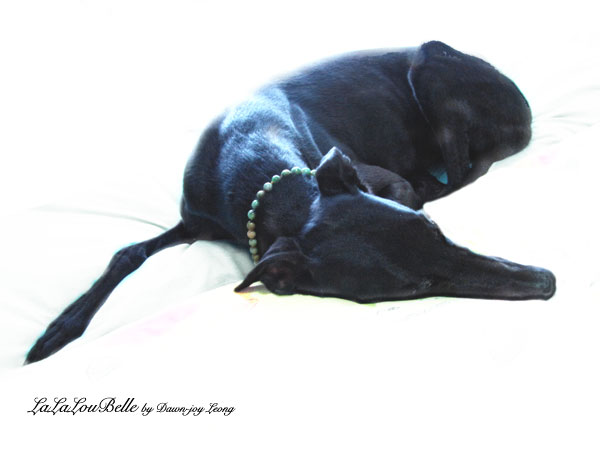
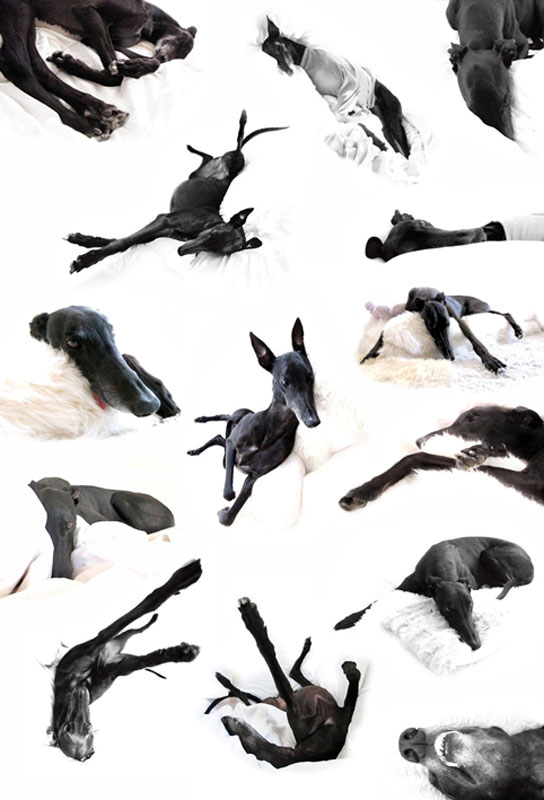
LaLaLouBelle is my new label, inspired by Lucy: a re-kindling of an old flame, and a new adventure.

Do please check out our work here:

LaLaLouBelle in WordPress.

LaLaLouBelle in Facebook.

LaLaLouBelle in Etsy.

Snoösphere 2017 – call out!

Upcoming project: Call Out!

snoosphere

Snoösphere, 2017

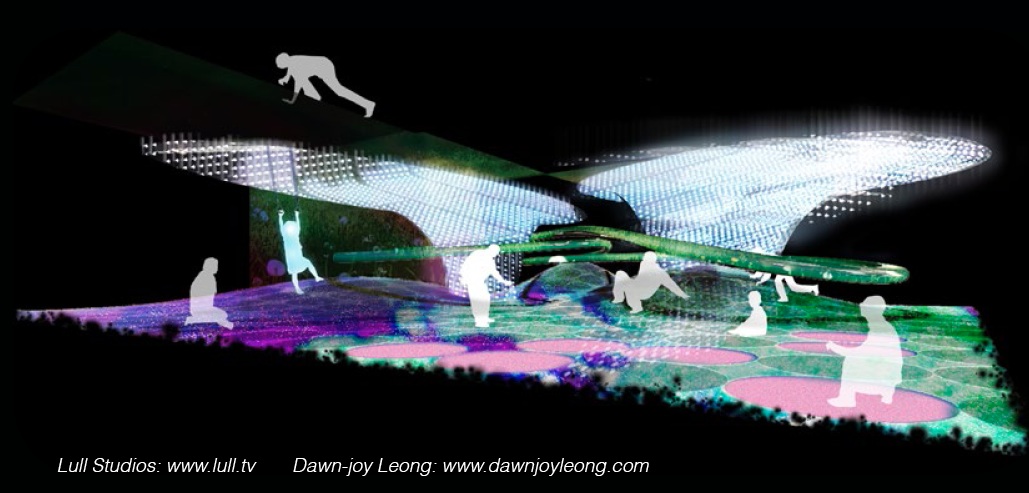
Snoösphere 2017 – a multisensory experience with a focus on autism, featuring autistic creative partnership.

Lull Studios and UNSW would like to invite autistic persons of all ages to join us as creative advisors in designing a gallery-based art installation.

Snoösphere is a space made up of interactive sound, vision, aroma, and touch-controlled elements, in which people can roam and explore. It is an immersive space for promoting discovery, empathy and understanding of the spectrum of neurodiversity.

Named for the noösphere, which is the phase in the Earth’s evolution after the biosphere – a future planetary sphere of mind – the Snoösphere promotes embodied consciousness of the sensory and energetic properties and performance of physical space.

We see this as the especial province of autistic artists. Instead of being passive end-users, autistic participants are an influential part of developing Snoösphere, putting into practice the ethos “Nothing About Us Without Us.”

Dr. Dawn-joy Leong is the autism consultant for Snoösphere, personally facilitating the interesting and fun autism-friendly sessions.

Participants will experience creative engagement and learn about the process of building a multisensory interactive environment aimed at supporting the sensory needs of autistics. Contributions from our autistic advisors will be duly acknowledged in the final production.

Introductory consultation sessions and workshops for small groups and individuals (completely free) will be held 17-20 November 2016, at UNSW Art & Design, Paddington.

Please feel free to contact Dawn-joy for more detailed information, or to register your interest in becoming part of our project. Dawn will reply to emails promptly and no question is too trivial.

Email: dawnjoy@mac.com

Phone: 0477424585

Acknowledgements

2015-Sonata---Lucy-Sonorous-Repose

Sonorous Repose – Lucy Like-a-Charm 2015 by Dawn-joy Leong     (please do not reuse without seeking prior permission)

Dear Friends and Supporters,

We have made it! The PhD has passed muster and now it’s time for acknowledgements.

 —-

Scheherazade’s Sea – autism, parallel embodiment and elemental empathy.

 Dawn-joy Sau Mun Leong, UNSW Art & Design, April 2016

Dedication:

To my father, Dr. Leong Vie-Ying (1930-2007).

Acknowledgements:

This work would not have been possible without the following:

Deepest gratitude to my supervisors,

Professor Jill Bennett and Dr. Petra Gemeinboeck,

for your patience, guidance, advice, support, and for believing.

Thank you, Dr. Sally Clark, for your advice, encouragement and support.

My Lucy Like-a-Charm

My family:

Thank you, mother, Molly Chye Gek Ong, for your care and fortification.

My beloved baby-sister and faithful champion, Althea Leong,

thank you for always being here, there, and everywhere for me.

Dear brother-in-law, Robin Sing,

thank you for your patience, sustenance and unquestioning support.

My canine nephews, Bizcuit and Tiny Sing

Thank you, my friends who have played important roles in my journey:

Yee Sang, Ho

Rick Feedtime

Minh Vuong

Kateryna Fury

Colin G. Marshall and Misty Marshall

Shan Patterson and Sally Patterson

C.J. Wan Ling, Wee

Margie Anne Edmonds

Brad Beadel

Gavin Koh

Boon Ling, Yee

Shane Fenton

Andrea Kingan

Rosemary Wilkinson

and

Everyone who has walked a part of our journey alongside us, however briefly, every single moment has mattered.

Autism and me: a lifelong quest for Beingness and Clemency of Being

Autism and me: a lifelong quest for Beingness and clemency of Being.

Guest lecture, 27 August 2015, School of Education, UNSW, Australia.

Thank you, Dr. Iva Strnadova, for inviting me to deliver this guest lecture since 2012. It has become an annual event I look forward to greatly.

I promised Iva I’ll tell as many personal stories as possible within the time limit, and so I shall. But before I launch into the dramatics, I’d like to begin with some basic terminology.

When I first began on my research journey, I adopted the prevalent deficits-focused, pathological perspectives and terminologies, because that was all I knew at the time. However, I henceforth prefer to use the term “Autism Spectrum Condition” instead of “disorder,” because this better describes the neurological culture that autism actually is. I also no longer use functioning labels – “high” or “low” functioning – as they are not only insulting to autistic persons, but more importantly they are based on a system of measurements that does not properly respect the innate autistic functional modalities and paradigms.

Now for my fabulous stories. Continue reading

Reciprocating Self and Other – lessons from autism.

Reciprocating Self and Other – lessons from autism by Dawn-joy Leong

Conference paper presented at the Inter-Disciplinary.Net conference,

Strangers, Aliens and Foreigners

Thursday 5th September – Saturday 7th September 2013

Mansfield College, Oxford, United Kingdom.

(This paper was first published in the ebook, “Experiencing Otherness: Multidisciplinary Perspectives”.)

Abstract.

Culture is the agglomeration of values, customs, and communication systems identifying groups of people, where demarcations can be geographic, economic, intellectual, or even neurological predisposition. In this paper, I shall discuss Autism Spectrum Condition as a mental culture, and investigate Self-Other identities from the perspective of a researcher-artist with Asperger’s Syndrome. Autism is widely portrayed by the general media as stereotypes exhibiting bizarre behaviour. Why is autism considered an aberrant existence? In reality, autistic individuals grapple daily with the complexities of Self and Other. Assimilation and communication is very much based on the autistic individual’s ability to grasp and ‘perform’ alien systems and realities. How much should we conform to the cultural tenets of Other at the expense of Self for the purpose of convivial integration, and how much to attend to Self for the sake of intrinsic preservation and need?

In the push for a more enlightened co-existence, some questions require address. When is co-existence considered cultural migration and when imposition? We are often strangers even in our own ‘homes,’ perennial actors and performers of Other, and thereby losing understanding and appreciation of Self. Should it be a compliment or insult when someone declares, “But you can’t be autistic, you don’t look or behave autistic?”

Perhaps a transdisciplinary approach to this conundrum is in order – one that will facilitate understanding and reciprocity between Self and Other. Continue reading